
You run a successful beauty school with strong enrollment, talented instructors, and graduates who pass state licensing exams at solid rates. But every time a prospective student asks, "Do you accept federal financial aid?", you watch them walk out the door and enroll at the competitor down the street who can say yes.
You've researched NACCAS accreditation because you know it unlocks Title IV federal aid eligibility. But the information you've found is maddeningly vague.
This guide eliminates that mystery. You'll learn:
Here's what matters: NACCAS accreditation isn't just a regulatory checkbox. It's the gateway to Title IV federal financial aid, and can double your enrollment growth within two admission cycles. But only if you approach it systematically with full cost transparency, proper preparation, and a documentation infrastructure that builds compliance capability rather than creating consultant dependency.
NACCAS accreditation unlocks one thing that changes your competitive position completely: eligibility for Title IV federal financial aid programs. This means your students can access Pell Grants (which don't require repayment) and subsidized federal student loans (where the government pays interest during enrollment).
The enrollment impact is significant and measurable. 66% of career school students represent ethnic minority groups, with schools serving communities where the median household income averages $58,951. For beauty programs costing $10,000-25,000, the majority of prospective students need financial assistance to enroll.
Without federal aid eligibility, your addressable market shrinks to students who can afford to pay out of pocket or qualify for private loans requiring credit checks and cosigners. Accreditation creates a competitive advantage by removing the primary enrollment objection. When prospective students ask, 'Do you accept federal financial aid?', accredited schools can say yes - non-accredited schools lose those prospects to competitors.
The financial urgency compounds with every enrollment cycle. A 100-student school losing just 20 students per year due to lack of federal aid eligibility represents $200,000-500,000 in lost annual revenue. Over a two-year accreditation journey, that's potentially $1 million in opportunity cost while your accredited competitors capture students you could have enrolled.
The acquisition value impact is equally significant for owners planning an eventual exit. For a school generating $200,000 in EBITDA, that's a $400,000-800,000 valuation difference. Every year you delay accreditation leaves substantial money on the table at sale.
Federal aid eligibility also creates a positive feedback loop for student outcomes. Students with access to grants and subsidized loans face less financial stress. ACCSC data shows beauty school completion rates average 68-82% depending on program length - rates that schools must maintain to preserve accreditation.
Every source mentions "$5,000-10,000" for accreditation fees. That figure is wildly misleading because it only captures direct NACCAS fees while ignoring the majority of actual costs you'll incur.
Direct NACCAS fees include the $5,000 initial application fee, $695 required Accreditation Workshop registration, $2,000-5,000 consultation visit evaluator expenses (travel, hotel, per diem that vary based on your location and how far evaluators must travel), and $1,500-3,000 annual renewal fees that begin after you achieve initial accreditation.

Required professional services add high costs. NACCAS requires audited financial statements (not compiled or reviewed reports, but full audits) less than 14 months old at the time of commission review. If your school uses cash-basis QuickBooks managed in-house, procuring audited financials means hiring a CPA firm at $3,000-8,000, depending on complexity. Many schools must convert from cash-basis to accrual accounting as part of this process. Some schools discover financial vulnerabilities during their first audit that must be addressed before NACCAS will grant accreditation.
The hidden cost is staff time, and this is where schools consistently underestimate the investment. ISS preparation typically requires 200-400 hours of administrative work: gathering documentation across all operational areas, creating policies that don't currently exist in written form, conducting internal assessments, mapping current operations to NACCAS criteria, and writing comprehensive narrative responses.
For a small school with a lean administrative staff, this represents months of diverted attention from daily operations. Calculate your loaded staff cost: 300 hours at $50/hour represents $15,000 in opportunity cost, even if you pay no consultant fees.
Published timelines range from "8 months minimum" to "18-24 months typical”. The difference comes down to three factors: your school's current documentation maturity, financial readiness, and whether you meet NACCAS outcome thresholds.
The accreditation process follows five mandatory stages that occur sequentially.
First, you attend the required NACCAS Accreditation Workshop, which is offered quarterly and requires registration 60+ days in advance.
Second, you prepare and submit the Institutional Self-Study, which is where most schools spend 6-12 months, depending on how much documentation exists before they start.
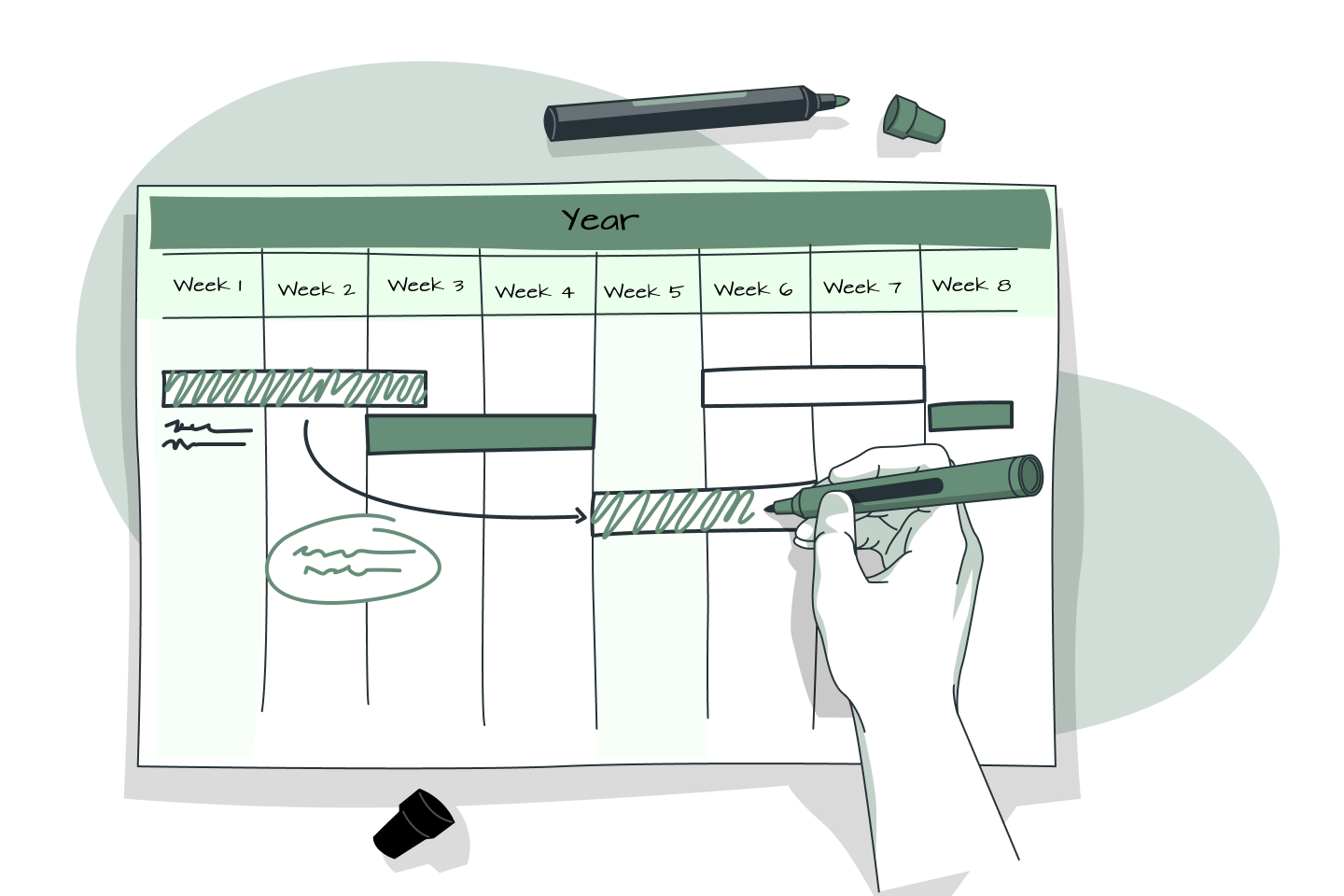
Third, NACCAS conducts an initial inspection visit to verify your documentation and assess facilities before scheduling the formal consultation visit.
Fourth, NACCAS schedules the Candidate Consultation Visit, which typically occurs 60-90 days after the initial inspection. During this visit, evaluators conduct comprehensive interviews, review documentation, and assess compliance across all ten standards. Evaluators produce a findings report within 2-3 weeks of the visit.
Fifth, you respond to any findings, and the NACCAS Accrediting Commission reviews your application at its quarterly meetings.
The ISS is where timelines explode or compress. If you submit incomplete documentation, the initial inspection reveals gaps immediately, delaying the consultation visit by 3-6 months while you gather missing materials. If the consultation visit reveals additional deficiencies, you must address them and potentially wait for another commission review cycle, adding 4-6 months to your timeline.
Some schools aren't ready for accreditation and need 6-12 months of foundation-building before applying. Attempting accreditation when not ready wastes tens of thousands of dollars and results in denial, problematic limitations, or extended delays that make the total cost higher than if you'd addressed gaps first.

Financial readiness: Do you have audited (not compiled or reviewed) financial statements less than 14 months old? NACCAS evaluates composite scores—current ratios, equity ratios, and cash flow. Weak scores trigger financial monitoring. Can you demonstrate 12+ months of stable enrollment and revenue?
Outcomes thresholds: Do you know your completion rates, job placement rates, and licensure pass rates calculated according to NACCAS methodologies? If your completion rate is 68% and the threshold is 70%, one bad cohort puts you on probation. Marginal outcomes need operational improvements before accreditation.
Documentation readiness: Do you have written, board-approved policies for admissions, satisfactory academic progress, attendance, refunds, grievances, graduation, and career services? If you answered no to more than two, you're not ready. How do you track outcomes? If it's informal (emails to graduates, manual spreadsheets), you can't demonstrate systematic effectiveness.
Governance structure: Do you have documented governance processes—meeting minutes, organizational charts, decision-making documentation? Single-owner schools making all decisions without documented advisory input struggle with NACCAS expectations.
If you identified significant readiness gaps, you need 6-12 months of foundation-building before workshop attendance. Build the financial controls, implement systematic outcomes tracking, create and document missing policies, and establish governance processes now. Attempting accreditation prematurely means you'll discover these gaps during ISS preparation or worse, during the consultation visit, forcing delays and additional costs.
The ISS is a 100+ page document covering ten standards with multiple criteria requiring narrative responses and supporting documentation. This isn't filling out a form with information you already have organized. For most schools, it's creating entire operational frameworks from scratch and documenting them comprehensively.
The ten NACCAS standards cover every aspect of your school's operations: Standard I addresses Mission and Objectives, Standard II covers Admissions, Standard III evaluates Governance and Administration, Standard IV examines Educational Programs, Standard V assesses Faculty and Staff, Standard VI measures Student Achievement, Standard VII reviews Financial Resources, Standard VIII evaluates Student Services, Standard IX inspects Facilities and Equipment, and Standard X analyzes Institutional Effectiveness. Each standard includes multiple criteria, some requiring narrative explanations of your processes, others requiring documented evidence of implementation.

Standard IV (Educational Programs): The criterion asks how you ensure programs meet objectives and industry standards.
Inadequate response: "Our experienced instructors follow curriculum guidelines and assess student progress regularly." (Vague, unverifiable)
Compliant response: "We ensure quality through quarterly curriculum reviews documented in faculty meetings (March 15, June 20, September 12, 2025), program-level learning outcomes mapped to clock-hour distributions tracked in our system, and annual assessment cycles analyzing competency data." Concrete example: "In Q2 2024, assessments revealed 22% of students struggled with thermal styling. Faculty implemented supplemental lab hours. Subsequent assessments showed 91% competency."
Documentation required: Curriculum documents with clock-hour distribution, competency rubrics, assessment data by cohort/instructor, and documented review meetings.
Standard VII (Financial Resources): Requires demonstrating financial stability. NACCAS calculates composite scores from audited financials, evaluating liquidity, equity, and profitability. Weak scores trigger monitoring.
You must provide: Audited statements, ratio calculations, a narrative explaining volatility, and financial planning documentation. Many schools operating on thin margins discover during the first audit that they're not financially ready and need 12-18 months to strengthen their position.
Standard VI (Student Achievement): NACCAS evaluates completion rates, job placement rates, and licensure pass rates against thresholds (typically 60-70% minimums).
You must provide: Documented calculation methodology using NACCAS definitions, cohort-level data by program and period, systematic graduate tracking with employer confirmations, and intervention processes with documented outcomes.
The threshold reality is unforgiving. Two consecutive periods below the threshold trigger monitoring. NACCAS reviews actual student files during visits to verify calculations. If outcomes are marginal, you need operational improvements before accreditation.
NACCAS sends evaluators (typically 2-3 experienced beauty school administrators from accredited institutions) to your campus for 1-2 days. They're not adversaries looking to deny your application. They're peer reviewers assessing whether your documented practices in the ISS match observable reality at your school.

Evaluators review documentation you've organized by standard: governance meeting minutes showing board oversight and decision-making processes, financial reports including your audited statements and budget documents, student files with personally identifiable information properly secured showing enrollment agreements, satisfactory academic progress evaluations, attendance records, and graduation documentation, curriculum documents including syllabi, competency assessments, and learning outcome measurements, facilities inspection records demonstrating compliance with safety and equipment standards, student complaint logs with documented resolutions showing how grievances are handled, and graduate outcomes verification records proving job placement claims.
They interview staff and students to assess whether your operations align with ISS claims. Faculty are asked about curriculum delivery methods, assessment practices, and how learning outcomes are measured and improved. Administrators are questioned about governance processes, financial management practices, and how institutional decisions are made and documented. Students are interviewed about their experience with admissions processes, academic progress monitoring, and student services. Graduates (sometimes) discuss the career services support they received and how the school helped them find employment.
They tour facilities assessing whether your physical plant meets Standard IX requirements: adequate instructional space for enrolled student volume, appropriate equipment in good working order (not outdated mannequins or broken styling stations), compliance with health and safety codes, and accessibility requirements under ADA.
The consistency test is what catches most schools. If your ISS claims quarterly curriculum reviews happen systematically, evaluators check meeting minutes to verify this actually occurs on the schedule you documented. If you described satisfactory academic progress monitoring where students are evaluated every payment period and receive written notification of academic standing, they pull student files to see evaluation records and communication documentation.
If policies state students receive written notification of grievance procedures and have access to a formal complaint process, they verify the complaint log shows the system is actually used and complaints are resolved according to documented procedures.
Common consultation visit findings that delay commission approval include documentation gaps where policies exist on paper, but implementation evidence is thin. For example, your grievance policy is board-approved and published in student handbooks, but the complaint log shows no formal entries over 18 months. Either students aren't complaining (unlikely), or complaints aren't being formally documented and tracked as policy requires.
Evaluators will note this discrepancy. Inconsistencies between the ISS narrative and observable practices also create problems. Your ISS describes systematic outcomes tracking with documented graduate contact and employment verification, but evaluators discover that job placement verification consists of informal text messages to graduates with no documented employer confirmations or formal verification records.
Minor findings are normal and easily addressed with follow-up documentation or policy clarifications. Major deficiencies mean delayed commission review while you correct underlying issues, adding 6-12 months to your timeline and requiring potential re-visits.
Within 2-3 weeks after the visit, you receive the Consultation Visit Report detailing the evaluator's findings. This report goes to the NACCAS Accrediting Commission for final review.
The commission meets quarterly to review applications, and its decision determines whether you achieve accreditation immediately, achieve it with conditions, or must address deficiencies before approval.

Three possible outcomes exist:
An initial accreditation granted means zero findings or only minor findings that don't require follow-up. The commission grants accreditation, and you're immediately eligible to begin the Title IV certification process with the Department of Education (a separate process taking 3-6 months). This is the best-case scenario where your preparation paid off.
Accreditation with stipulations or limitations means the commission grants accreditation but imposes specific requirements: submit financial reports quarterly until financial stability improves, demonstrate outcome improvement to reach thresholds within a defined timeframe, or address specific facility deficiencies by a deadline. You're accredited but monitored until stipulations are satisfied.
Denial or deferral means significant deficiencies were identified that must be corrected before accreditation can be granted. You address underlying issues and potentially face another consultation visit or extended review process. This adds 6-12 months minimum and additional costs for re-application or re-visits.
Achieving NACCAS accreditation is step one. You must then apply for Title IV program participation with the Department of Education, which involves additional documentation, financial responsibility assessments, possibly a Program Participation Agreement review, and typically takes 3-6 months from commission approval to Department of Education authorization.
Realistic timeline from commission approval to students actually accessing federal aid in your school is 4-8 months. Plan your marketing campaigns and enrollment strategies accordingly. Don't promise federal aid to students enrolling before you've completed the Department of Education certification process.
Your immediate priorities depend on which readiness scenario matches your school's current state.

If you're not ready (foundation-building track), your focus should be on addressing outcome threshold gaps through operational improvements. Implement better student support systems (tutoring, academic intervention, financial counseling), enhance career services to improve job placement rates (employer relationship development, resume workshops, interview preparation, graduate tracking systems), improve instructional quality through faculty development and curriculum refinement, address financial control weaknesses by implementing proper accounting systems and budgeting processes, create and document missing policies across all operational areas using templates aligned to NACCAS standards, and establish systematic student outcomes tracking that calculates metrics according to NACCAS methodologies rather than informal methods. Timeline: 6-12 months of foundation-building before workshop attendance makes sense.
Bella's readiness assessment module shows exactly which gaps to prioritize based on their impact on accreditation approval and tracks your progress toward application-ready status.
If you're standard-track ready, register for the next available NACCAS Accreditation Workshop (offered quarterly, requires 60+ days advance registration). Simultaneously begin procuring audited financial statements if not current (start this immediately because CPA firms often have 8-12 week backlogs), implement Bella or another systematic compliance platform to begin organizing operational data into NACCAS-compliant documentation structures, conduct policy gap analysis and begin creating or updating documented procedures for areas where written policies don't exist, and establish systematic student outcomes tracking if current methods are informal or don't calculate metrics according to NACCAS definitions.
After attending the workshop, use insights about ISS requirements to finalize your self-study using pre-populated sections from your compliance system and submit within 4-6 months of workshop attendance.
If you're fast-track ready, you already have strong financials, documented policies, and systematic outcomes tracking in place. Register for the workshop immediately (don't delay waiting for the "perfect" time), implement Bella or verify your current systems can generate ISS documentation in NACCAS formats, attend the workshop and submit ISS within 3-4 months because your documentation is already organized.
Your advantage is that Bella ensures the documentation you've already created maps precisely to NACCAS expectations rather than discovering during ISS preparation that your existing documentation doesn't quite match what evaluators need. What might be 90% ready becomes 100% compliant with minor adjustments rather than major reconstruction. Expected timeline: commission approval 10-12 months from workshop attendance, Title IV eligibility 14-16 months from starting the process.
Book a demo to assess your school's readiness across all ten NACCAS standards and see how Bella can help with your accreditation.
You now have transparent budget scenarios ($18,000-50,000 depending on approach), readiness frameworks (fast-track 10-12 months, standard 14-18 months, foundation-building 20-24+ months), concrete ISS examples showing what adequate responses require, and timeline projections based on your situation.
Every enrollment cycle without accreditation represents $200,000-500,000 in lost revenue. Every quarter of delay reduces your sale price by hundreds of thousands.
NACCAS accreditation isn't a regulatory burden to be endured. It's a strategic investment. The schools that compress timelines from 24 months to 12 months and control costs at $25,000-30,000 instead of $45,000-50,000 are those that approach accreditation systematically with proper documentation infrastructure from day one.

10-24 months, depending on readiness. Schools with audited financials, documented policies, and systematic outcomes tracking achieve it in 10-12 months. Most schools need 14-18 months to create missing documentation. Schools with fundamental issues (weak outcomes, financial instability, facility gaps) need 20-24+ months to address problems before applying.
$18,000-50,000 total. Direct costs: $5,000 application, $695 workshop, $2,000-5,000 visit expenses, $3,000-8,000 audit. Consultants: $10,000-25,000 comprehensive or $3,000-8,000 partial. Staff time: 200-400 hours. Realistic budget for most schools: $28,000-35,000. Software like Bella reduces costs to $22,000-30,000 by eliminating 80% of manual work.
A 100+ page document covering operations across ten NACCAS standards requiring narrative responses plus supporting documentation. It's not filling out a form—it's creating operational frameworks (policies, outcomes tracking, governance processes, curriculum assessment) and demonstrating them comprehensively. This takes 6-12 months and consumes 200-400 staff hours for schools without systematic documentation.
Yes, but it requires more staff time and carries a higher risk of gaps causing delays. Schools attempting DIY should use software like Bella to organize documentation systematically. Even with software, expect 200-300 hours of staff time. Many use a hybrid: software handles organization, a focused consultant provides final review.
NACCAS evaluates completion rates, job placement rates, and licensure pass rates, requiring 60-70% minimums. Schools consistently below thresholds face monitoring, improvement plans, or accreditation loss. If outcomes are marginal (within 5% of thresholds), you need operational improvements before pursuing accreditation.
Frequently asked questions ordered by popularity. Remember that if the visitor has not committed to the call to action, they may still have questions (doubts) that can be answered.
Not at all. We’ll move your data and guide your team. You’ll be ready to go in days, not weeks.
Yes. Bella is built for vocational schools and stays updated with state and federal rules.
Bella is made to be simple. If you can check email, you can use it. And we’re here to help whenever you need.
It helps spot missing info, flags risks early, and reminds you of what’s due—without you having to dig.
Yes. Pricing scales with your size, and most schools save time and money within the first month.
Absolutely. Bella uses encrypted, secure hosting and is fully FERPA compliant.
Tips, checklists, and insights for school owners and admins, written in plain language, not tech speak.